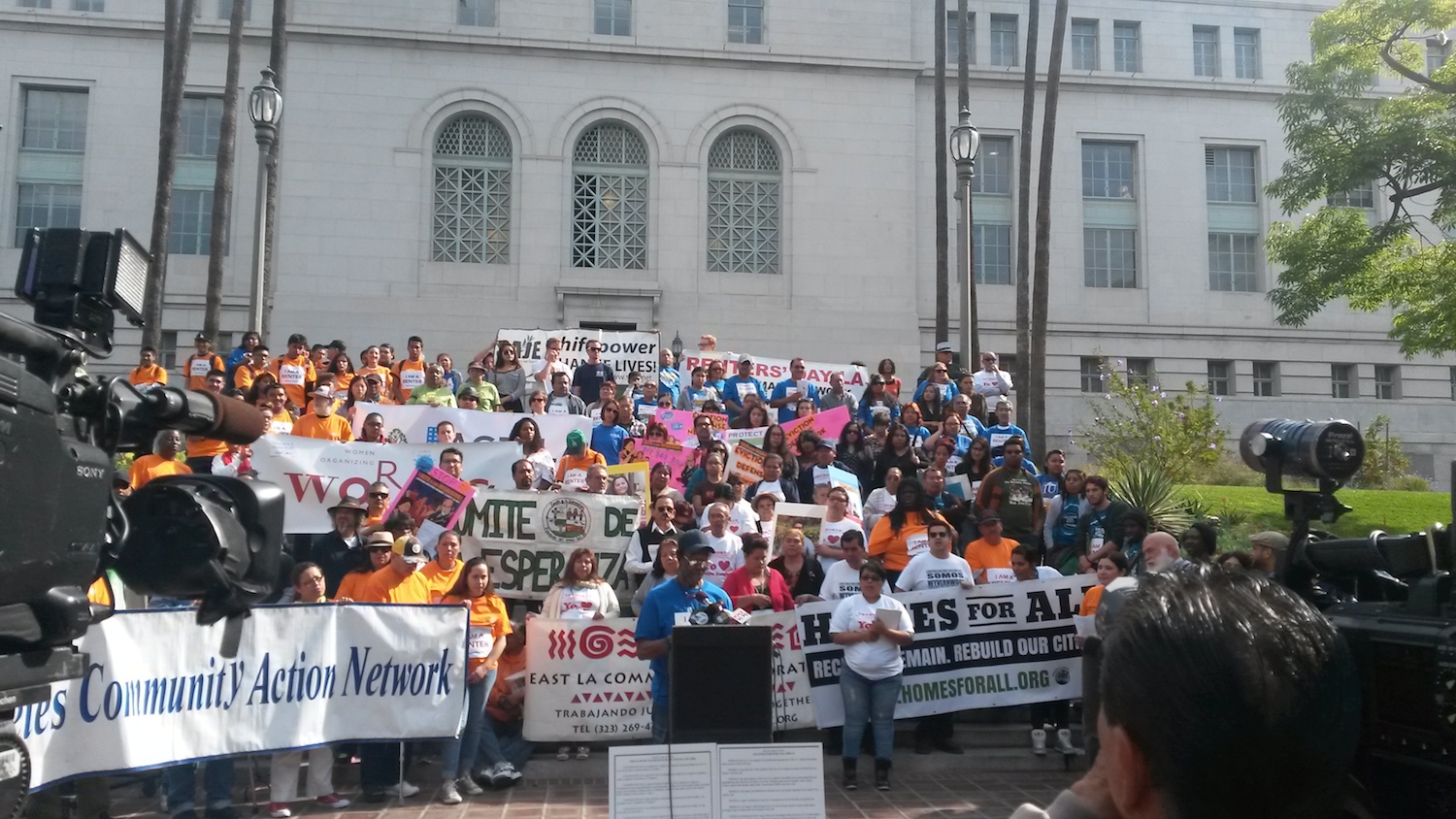
Last month, a proposed massive A-I data center in Monterey Park was scuttled after united community opposition in the San Gabriel Valley, particularly by immigrant residents in some of the unincorporated areas. The Monterey Park City Council approved a ballot measure for submission to voters in June that would ban data centers in the city. But the issue is still a live one in many other area cities. The City of Vernon has approved a data center, claiming it will replace the closed Farmer John sausage factory. A plan by Amazon to turn a location into a data center in Pasadena has met with opposition. Amazon claims the facility will be used for ‘quantum computing,’ not Artificial Intelligence.
According to CALO News, San Gabriel Valley residents uncovered plans in the City of Industry to transform the Puente Hills Mall into a data center in December of last year. They started organizing to express their opposition and educate their neighbors about concerns that the new development might cause environmental harms to surrounding communities.
Samuel Brown Vazquez, an environmental activist in Bassett (a small town and school district near La Puente) and a member of the Avocado Heights Vaqueros, told CALO News that when he first heard about the potential data center in December, he and other community members filed Freedom of Information Act requests to obtain more information. Those documents confirmed it: the City of Industry was approving zoning changes and planning to allow a data center in the Puente Hills Mall, along with two battery centers in the city.
Sophia Ramirez, a Whittier resident, told CALO that when she and other organizers canvassed door to door about the data center, many people did not know about it. When people did learn about the proposal, they were concerned that it would bring more pollution, especially located near the San Gabriel River, and could cause fires, increase heat in the area and raise costs associated with homeowners’ insurance, electricity and water bills.
“I think all of these very fast developments are very frightening,” Ramirez said. “I think it’s just a continuation of this capitalist greed and a complete disregard for our working class and immigrant communities. These corporations just have interest in expanding and developing more and they just see a way to make more money, and to develop on a plot of land, and they do not care how the surrounding community is impacted.”
The Pasadena Star News reported at the end of April that the City of Industry plans are not yet going forward. The real estate developer that has control of the mall property is not committed to the data center project, and would need further approvals even if that commitment were made.
Data centers have been associated with the increased use of AI. They use water for cooling the banks of microprocessors — some up to five million gallons a day — to prevent overheating. They also add greenhouse gases to the environment, and increase fire risks. Ramirez said that many of the community members who have attended City of Industry city council meetings have asked for an environmental report to learn about the impacts the proposed data center could have on them.
Brown also said that community members are also concerned about the possibility of AI data centers being used to conduct mass surveillance and target their communities. Multiple investigations have shown that the Customs and Border Enforcement, ICE and the Department of Homeland Security have used AI for surveillance and information gathering.
Manuel Maldonado, who has lived in the area for nearly 60 years, said that he and his neighbors are also concerned about the proposed data center. He said that many of the people who live in the area are immigrants and first-generation, as the San Gabriel Valley is predominantly Latino and Asian. He said many SGV residents speak languages other than English, which makes it even harder for them to express their concerns because the City of Industry does not provide interpretation services at their council meetings. Maldonado said that he has had to interpret for people at the meetings on his own initiative and without getting paid.
Ramirez said that in addition to people not having access to interpretation at City of Industry city council meetings, community members’ comments were reduced from three minutes to one. Brown Vazquez said that the council also deactivated their emails because of the influx of messages they were getting about the data center.
While residents in cities like Monterey Park have been successful in getting their city council to vote against data centers, SGV residents said that it is more difficult to work with the City of Industry city council members because they are not receptive to the surrounding community’s concerns. Residents of nearby cities make up most of the activism, as fewer than 300 people actually live in City of Industry, a little like the so-called “rotten boroughs” in England that had government functions but few residents, allowing a concentration of unaccountable power. Many of the cities around City of Industry, including Hacienda Heights, San Jose Hills, Valinda, and parts of Whittier, are unincorporated, so they lack a central voice and direct representation.
Steven Kung, co-founder of No Data Center Monterey Park, believes the San Gabriel Valley is being targeted because the companies want to take advantage of communities of color. “They make racist assumptions about [our] activism, …engagement, …level of education. That’s why they’re targeting us. It’s environmental racism.”
Drawing inspiration from Monterey Park’s victory, SGV residents have ramped up their advocacy. They started forming a coalition of groups including SGV Progressive Action, Avocado Heights Vaqueros, the activists who succeeded in the Monterey Park data center moratorium and more people to meet, plan and strategize how to stop a data center from being built in the Puente Hills Mall. So many people have been attending the City of Industry city council meetings that they overflowed the room and people had to wait outside.
Brown Vazquez said this is the first time he is seeing activism to this extent in the area. He said that when he attended City of Industry Council meetings in the past, he would sometimes be the only one there. He said the coalition is planning to continue organizing and coming up with strategies to stop the data center.
“It galvanized a lot of people in a way that I haven’t really seen,” Brown Vasquez told CALO News. “It’s really the future of what kind of society we want to live in. If we allow these data centers to come in, we’ve accepted that AI is going to be the determining element of our life moving forward. And with that is loss of jobs. With that is mass surveillance and environmental impacts.”
No Data Center Monterey Park is calling on voters to approve the ballot measure for their city in June, and in April was organizing to get their City Council to include battery centers in the ban. More information about their coalition is available at https://nodatacentermpk.substack.com/ and https://www.nodatacenterssgvcoalition.org/