by Nicolas J. S. Davies
In July 2025, the UN General Assembly organized a “High-level International Conference for the Peaceful Settlement of the Question of Palestine and the Implementation of the Two-State Solution.” The conference was chaired by France and Saudi Arabia, and its goal was “not only to reaffirm international consensus on the peaceful settlement of the question of Palestine but to catalyze concrete, timebound and coordinated international action toward the implementation of the two-State solution.”
The conference produced a lengthy “New York declaration,” which was endorsed by the General Assembly on September 12th by a vote of 142 to 10, with 12 abstentions. But, as we will explain, this was a plan for “the day after” that fails to bring that day any closer, because it deliberately avoided taking the “concrete, time-bound and coordinated international action” that its mandate called for.
The declaration was based on the deliberations of 8 working groups, co-chaired by representatives of 15 different countries, the Arab League and the European Union, which each drew up plans for what should happen after a hypothetical permanent ceasefire in Gaza, with topics like “Humanitarian Action and Reconstruction” and “Security for Israelis and Palestinians.”
The resulting plan would restore the rule of the Palestinian Authority (PA) in Gaza through a “transitional administrative committee” under the “umbrella” of the PA until a new presidential and general election is held, no more than a year after the ceasefire. The PA has welcomed the plan, which would put it back in control of Gaza, backed up by a UN peacekeeping force, but other Palestinians don’t seem to have been consulted.
The borders of Israel and Palestine would be based on Israel’s pre-1967 borders. But the plan also preserves the term “land for peace” from the 1991 Madrid agreement, which led neither to peace nor to secure borders for any of Israel’s neighbors. Israel abused this concept to treat its borders as negotiable and subject to “facts on the ground,” as it seized more and more land for its illegal settlements. So which is it? Pre-1967 borders or “land for peace,” which has until now been a euphemistic pretext for endless, ever-expanding occupation?
The declaration also welcomes a promise by PA president Abbas that Palestine will not be a “militarized state.” But how can Palestine ever be truly independent with no armed forces of its own, next door to the hyper-militarized, expansionist state of Israel?
What is to stop Israel attacking and invading Palestine at will, as it does to Lebanon, Syria and the occupied territories today? Would Jordan or Egypt, who both took part in the working groups and the conference, agree to unilaterally disarm too? Of course not.
Three roundtables at the July conference, chaired by former Irish president Mary Robinson, former Colombian president Juan Manuel Santos and former UN High Commissioner for Human Rights Zeid bin Ra’ad of Jordan, agreed that the General Assembly’s first step should be international recognition of the state of Palestine.
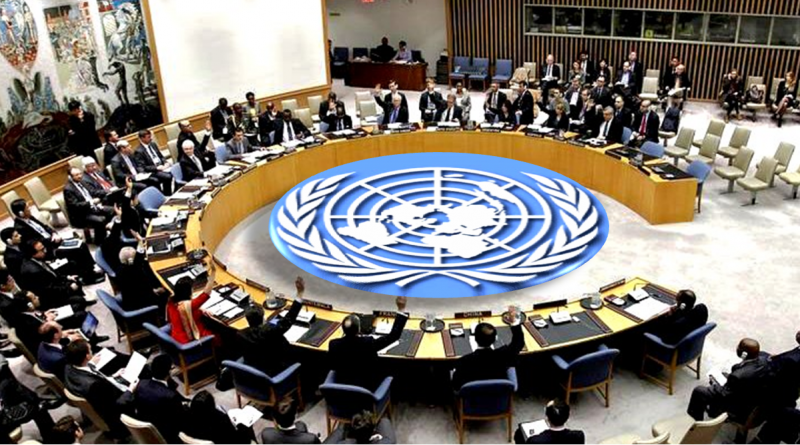
UN recognition requires the approval of both the General Assembly and the UN Security Council. But with a large majority of countries supporting recognition, and the United States wielding its veto to sideline the Security Council, the General Assembly could have called an Emergency Special Session (ESS) under the “Uniting for Peace” principle, to formally recognize Palestine and welcome it as a full UN member.
The General Assembly chose not to call an ESS, even though it was an Emergency Special Session in September 2024 that convened the July 2025 conference in the first place. Instead, it endorsed the declaration in a regular session of the General Assembly that did not have the power to confer UN recognition.
As Cuban foreign minister Bruno Rodriguez Parilla said in his speech to the General Assembly on September 27th, the General Assembly should now reconvene the ESS “without further delay” to take concrete measures for Palestine, including a binding resolution on full UN membership.
The most serious omission from the July 2025 conference and declaration was that there was no working group or roundtable on concrete, coordinated UN action to impose a ceasefire in Gaza, the vital first step to get to the “day after” that all the other working groups were tasked with planning for.
It was entirely predictable that Israel would reject and ignore the declaration, as prime minister Netanyahu did in his General Assembly speech on September 26th, 2025. If the General Assembly is serious about ending the genocide and the occupation, it must hold an Emergency Special Session to consider concrete measures that will force Israel to end the genocide, such as a UN-led arms embargo and economic boycott.
The UN Human Rights Office in Geneva already has a database of 158 Israeli and multinational corporations that are complicit in Israel’s illegal occupation, so an international boycott of those companies could take effect immediately.
If the large majority of countries that voted for the declaration are ready to back their words and their votes with coordinated action, a UN-led trade boycott, divestment campaign and arms embargo can put enormous pressure on Israel to end its genocide and starvation of Gaza, and its occupation of Palestine. With full participation by enough countries, Israel’s position could quickly become unsustainable.
Many speakers at the 2025 General Assembly called passionately for this kind of decisive action to bring about a ceasefire in Gaza and end the occupation. King Abdullah of Jordan asked, “How long will we be satisfied with condemnation after condemnation without concrete action?”
President Lula said that Brazil already has an arms embargo against Israel and has cut off all trade with its illegal settlements; Turkiye severed all trade links with Israel in August; Dutch prime minister Dick Schoof called for an arms embargo and the suspension of the EU’s trade agreement with Israel; and Chadian prime minister Allah-Maye Halina declared, “Our duty from this moment on is to transform this strong declaration into concrete acts and make the Palestinian people’s hope a reality.”
The September 2024 Emergency Special Session demanded that Israel must end the occupation within a year. Israel’s refusal to even begin to do so, and its appalling escalation of its genocide in Gaza, repression in the other occupied territories and attacks on other countries provide all the grounds the General Assembly should need to take the concrete, coordinated measures so many countries are calling for.
Tragically, instead of applying the pressure it will take to secure a ceasefire and end the occupation, France, Saudi Arabia and their partners instead promised Israel benefits, such as regional economic integration and recognition by Arab and Muslim countries, to try to seduce or bribe Israel into ending its genocide and occupation.
This was never going to work, and it has wasted irreplaceable, precious lost time for the people of Gaza, as Israel methodically destroys Gaza City, buries hundreds more families under the rubble of their homes, and starves more people to death every day.
This is the moment to follow up on this failed initiative with decisive UN-led action that is actually designed to end the genocide, by imposing economic sanctions, an arms embargo and other measures to isolate Israel.
As Omani foreign minister Badr bin Hamad Al Albusaidi told the Assembly, “It is our shared responsibility to intensify our efforts and to apply effective pressure to bring Israel to the negotiating table.”
There is nothing to prevent the General Assembly from quickly pivoting to a new meeting of its Emergency Special Session on Palestine. The ESS can finally take the “concrete, time-bound, coordinated international action” that the flawed French- and Saudi-led process promised, but failed to deliver – or as Malaysian foreign minister Mohamad Hasan described it, “concrete action against the occupying force.” That can include UN recognition of Palestine, a UN-led arms embargo and economic boycott, and other measures.
While leaders make speeches at the UN, Israel is conjuring up unthinkable new horrors, and the people of Gaza are literally hanging on for dear life, under bombardment and starvation, day after day, waiting for the world to act.
Nicolas J. S. Davies is an independent journalist, a researcher for CODEPINK and the author of Blood on Our Hands: The American Invasion and Destruction of Iraq. He is also the co-author, with Medea Benjamin, of War In Ukraine: Making Sense of a Senseless Conflict, out now in a revised, updated 2nd edition.